
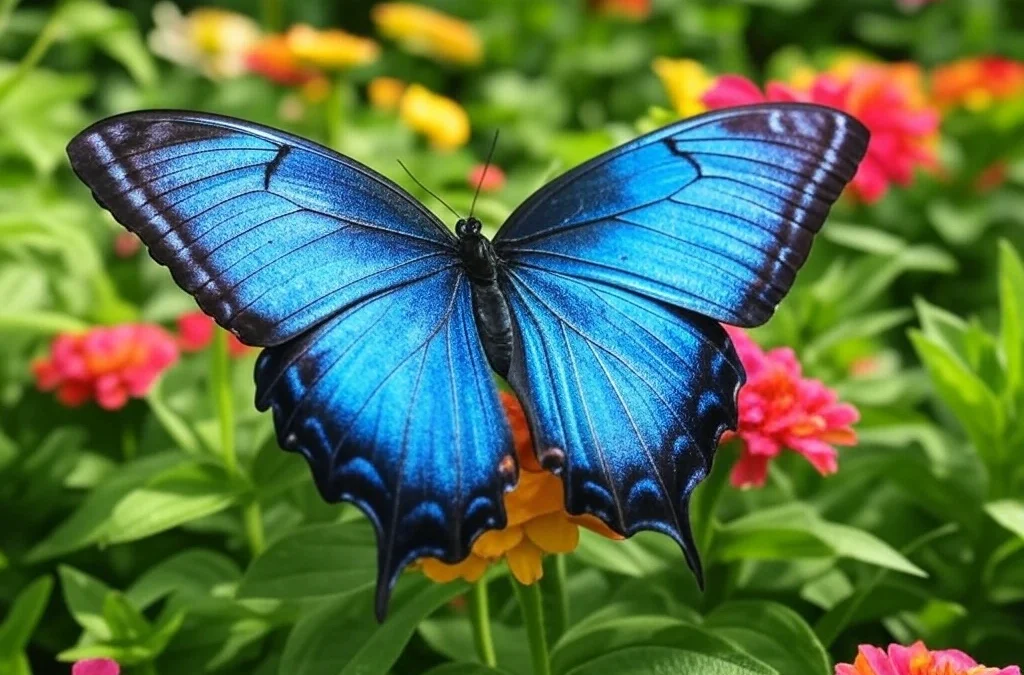
Wings have captured human imagination for centuries. From tiny insects to powerful birds, from mythical beasts to modern machines, wings allow movement, lift, and freedom. This list of 100 winged things covers the most fascinating examples found in nature, history, and design. You will discover animals with wings, objects with wings, and even surprising winged inventions. Whether you are curious about birds, insects, flying reptiles, or human-made winged creations, this is the ultimate guide to things that have wings.
100 Examples of Winged Things
1. Bald Eagle
A powerful bird of prey known for its white head and tail. Its broad wings enable it to soar high and spot prey from great distances.
2. Monarch Butterfly
Recognized by its orange and black patterned wings, this butterfly migrates thousands of miles annually.
3. Paper Airplane
A simple, folded paper creation that glides on air currents thanks to its wing-like shape.
4. Dragonfly
An agile insect with two pairs of transparent wings, capable of hovering and swift flight.
5. Albatross
Possesses the longest wingspan among birds, allowing it to glide over oceans for hours without flapping.
6. Hummingbird
Known for rapid wing beats, enabling it to hover in place while feeding on nectar.
7. Fruit Bat
Also called flying foxes, these mammals have large wingspans and rely on echolocation to navigate at night.
8. Ladybug
A beetle with hard, red-spotted wing covers that open to reveal delicate flying wings underneath.
9. Peregrine Falcon
The fastest bird, diving at speeds over 200 mph to catch prey mid-air.
10. Pegasus
A mythical winged horse symbolizing freedom and inspiration in various legends.
11. Phoenix
A legendary bird that cyclically regenerates, rising from its ashes with renewed wings.
12. Griffin
A mythical creature with the body of a lion and the wings and head of an eagle.
13. Bee
Insects with two pairs of wings, essential for pollination and producing honey.
14. Mosquito
Small flying insects with slender wings, known for their buzzing sound and biting behavior.
15. Angel
Spiritual beings depicted with large, feathered wings, representing purity and guidance.
16. Moth
Nocturnal insects with scaled wings, often attracted to light sources at night.
17. The Winged Hussars (Polish History)
Famous cavalry units with large feathered wings attached to their backs, striking fear into enemies on the battlefield.
18. Flying Fish
Marine creatures that propel themselves out of water, using their wing-like fins to glide in the air.
19. House Sparrow
A small, common bird with short wings, adept at quick, darting flights in urban areas.
20. Beetle
Insects with hard wing covers protecting the delicate flight wings beneath.
21. Pigeon
Urban birds with strong wings, capable of flying long distances and returning home.
22. F-22 Raptor
A U.S. stealth fighter jet with sharply swept wings and thrust-vectoring nozzles for extreme maneuverability.
23. Vampire Bat
A bat species known for feeding on blood, using its wings for agile nocturnal flight.
24. Kite (Bird)
Birds of prey with long wings and forked tails, gliding effortlessly in the sky.
25. Harpy
Mythical creatures with the body of a bird and the face of a woman, known for swift flight.
26. Firefly
Insects with wings that emit light, creating glowing displays at night.
27. Locust
Grasshoppers with strong wings, capable of long-distance swarming flights.
28. Stork
Large birds with broad wings, often associated with delivering babies in folklore.
29. Fairy
Mythical beings depicted with delicate, insect-like wings, often associated with nature.
30. Airplane
Man-made machines with fixed wings, designed for controlled flight through the atmosphere.
31. Helicopter
Aircraft with rotating wings (rotors) that allow vertical takeoff and landing.
32. Glider
Engine-less aircraft with long wings, relying on air currents for sustained flight.
33. Hang Glider
Lightweight, non-motorized aircraft with fabric wings, piloted by shifting body weight.
34. Butterflyfish
Marine fish with wing-like fins and vibrant patterns, resembling butterflies.
35. Flying Lemur
Also known as colugos, these mammals glide between trees using a membrane stretching from neck to tail.
36. Flying Dragon (Lizard)
Lizards with extendable ribs supporting wing-like membranes for gliding.
37. Flying Ant
Reproductive ants with wings, emerging during specific seasons for mating flights.
38. Maple Samara
The one-winged “helicopter” seed of a maple tree. Its stiff, curved wing lets it spin and drift far from the parent tree.
39. Flying Snake
Snakes that flatten their bodies to glide between trees in Southeast Asia.
40. Flying Frog
Frogs with webbed feet and skin flaps, enabling them to glide between trees.
41. Flying Gecko
Geckos with skin flaps along their bodies, allowing them to glide short distances.
42. Flying Squirrel
Rodents with a patagium, a skin membrane that enables gliding between trees.
43. Pterodactyl
A prehistoric reptile with leathery, elongated wings and a pointed beak.
44. Drone (quadcopter)
A small, powered quadcopter with stabilizer wings or rotor arms for lift.
45. Quetzalcoatlus
A Late-Cretaceous pterosaur with an estimated 10-meter wingspan—the largest known flying animal in Earth’s history.
46. Gargoyle with Wings
Carved stone figures with wings perched on gothic cathedrals, thought to ward off evil spirits.
47. Winged Helmet
Iconic helmets from ancient art and mythology, decorated with small, dramatic wings on either side.
48. Gliding Robot
Modern robotic devices designed with artificial wings to mimic bird or insect flight.
49. Flying Insect Robot
Tiny mechanical devices engineered to flap thin wings and hover much like real insects.
50. Icarus’ Wings (Greek Myth)
According to legend, Icarus flew too close to the sun on wings made of feathers and wax.
51. The Golden Snitch (Harry Potter)
A small winged ball used in Quidditch, known for its rapid and unpredictable flight.
52. Winged Scarab (Ancient Egypt)
Sacred beetle amulets often crafted with outspread wings, symbolizing rebirth and protection in Egyptian art.
53. Black Skimmer
A unique seabird with long wings and an unusual bill, skimming just above water surfaces for fish.
54. Snow Petrel
A pure white Antarctic bird with strong wings, able to survive and soar through freezing polar winds.
55. Concorde Jet
A supersonic passenger airliner with slender delta wings that once slashed transatlantic flight times to about three hours.
56. Space Shuttle Orbiter
NASA’s reusable spacecraft whose black-tiled wings let it re-enter the atmosphere and glide safely to a runway landing.
57. Common Swift
A small bird built for speed; its narrow crescent wings keep it aloft for months while it feeds and even sleeps on the wing.
58. Winged Victory of Samothrace
An ancient Greek marble statue of Nike, the goddess of victory, frozen mid-stride with powerful stone wings outspread.
59. Da Vinci’s Ornithopter
Leonardo’s visionary Renaissance sketch of a human-powered craft with flapping cloth wings inspired by birds.
60. Angel of the North
A monumental steel sculpture in northern England depicting an angel whose rust-red wings stretch an impressive 54 metres.
61. Talaria (Hermes’ Winged Sandals)
In Greek mythology, Hermes’ magic sandals featured small wings that allowed him to fly.
62. The Wright Flyer
The first successful powered aircraft, built by the Wright brothers, with thin fabric-covered wings.
63. Wind Turbine Blade
Huge rotating wings harnessing the power of the wind to generate clean electricity around the world.
64. Macaw
A brightly colored parrot from the rainforests, known for its large, powerful wings and loud calls.
65. Condor
One of the world’s heaviest flying birds. Its massive wings help it soar effortlessly for long distances.
66. Snowy Owl
A striking white bird with broad wings, adapted to cold climates and silent flight.
67. Kingfisher
A small bird with short, rapid wing beats, darting quickly over water to catch fish.
68. Swallow
Famous for their graceful, agile flight patterns as they hunt insects mid-air.
69. Cicada
Insects with transparent wings that vibrate to produce loud buzzing sounds.
70. Raven
A large black bird with powerful wings, known for intelligence and strong aerial acrobatics.
71. Crow
Adaptable birds with strong wings, often seen flying confidently in urban and rural areas.
72. Seagull
Coastal birds with long wings, gliding over beaches and waves in search of food.
73. Kookaburra
A chunky bird with sturdy wings, famous for its loud, laughing call.
74. Flamingo
Tall wading birds with pink feathers and strong wings, capable of flying great distances.
75. African Grey Parrot
Highly intelligent parrots with solid wings, often kept as pets for their talking ability.
76. Canary
Small songbirds with bright feathers and quick wing beats, popular as companions.
77. Goldfinch
Tiny birds with bright yellow plumage and distinctive fluttering flight.
78. Woodpecker
Birds with strong, stiff wings that help balance them as they drill into tree trunks.
79. Puffin
Seabirds with short wings, flapping rapidly as they fly low over the ocean surface.
80. Emperor Moth
Large moths with beautiful, eye-like markings on their broad wings.
81. Swallowtail Butterfly
Butterflies recognized by their vibrant wings and characteristic long tails.
82. Biplane
An early aircraft with two stacked wings, historically significant in aviation.
83. Falcon Kite
A lightweight kite designed to look and move like a real bird of prey.
84. Zeppelin
An airship with stabilizing wings or fins, once used for long-distance travel.
85. Bee-eater
Colorful birds with slender wings, catching bees and other insects mid-flight.
86. Magpie
Black and white birds with long wings and tails, known for their curiosity and boldness.
87. Cormorant
Water birds with long, narrow wings used for both flying and diving underwater.
88. Eurasian Jay
A striking bird with blue wing feathers, known for its skill in storing food.
89. Blue Jay
North American birds with vivid blue wings and a loud, harsh call.
90. Turaco
African birds with green and blue wings that flash brightly when they fly.
91. Nightjar
Nocturnal birds with soft, silent wings, flying at dusk to hunt insects.
92. Luna Moth
A large moth with pale green wings and distinctive long tails on the hindwings.
93. White-tailed Kite
A small raptor that hovers mid-air with outstretched wings as it scans for prey.
94. Hoverfly
Insects with rapid wing movement, often mistaken for bees due to similar colors.
95. Eagle Ray
Marine animals with wide, flat fins resembling wings, which they use to “fly” through water.
96. Butterfly
Insects with colorful, patterned wings, undergoing metamorphosis from caterpillars.
97. RC Plane
Remote-controlled airplanes with rigid wings, popular in model aviation hobbies.
98. Frigatebird
Seabirds with long, narrow wings and a distinctive forked tail.
99. Mynah Bird
Vocal birds with rounded wings, known for their ability to mimic human speech.
100. Wingsuit
A tailored jumpsuit with fabric airfoils stretching between the arms and legs, letting skydivers glide like human “flying squirrels.”
How Did Animals Develop Wings?
The story of wings is a story of survival and change. Animals did not simply grow wings overnight. The development of wings took millions of years. It happened step by step. Tiny changes over long periods led to what we now call flight.
The first creatures with wings were not birds. Long before birds appeared, insects were already flying. Fossil records show that insects were the first animals to develop wings. Scientists believe early insects might have used small flaps of skin (rigid lobes (paranota) or modified gill branches) to glide from plant to plant. Over time, those flaps became true wings.
Birds came much later. Birds evolved from dinosaurs. Yes, you read that right. Certain small dinosaurs had feathers. At first, these feathers probably helped with warmth or showing off to others. Eventually, they helped these animals catch air and lift off the ground. Those feathered dinosaurs gave rise to the birds we know today.
Bats tell another part of the story. Bats are mammals. They developed wings much differently. A bat’s wing is a thin layer of skin stretched between long fingers. Unlike birds and insects, bats used their fingers to support their wings.
The development of wings gave animals a big advantage. With wings, they could escape predators. They could find food in new places. They could travel far and wide. Wings opened up a whole new way of living.
The human experience with wings comes from watching birds, insects, and bats. People have always looked up and wondered what it feels like to fly. That curiosity led to airplanes, gliders, and even paper planes.
The question “how did animals develop wings” still fascinates people today. We may not have all the answers yet. Fossils, genetics, and careful observation continue to teach us more. One thing is clear: wings are one of nature’s most successful inventions.
Synonyms of “Wing”
The word wing has several synonyms, depending on context. Here are the most commonly used alternatives:
-
Flap
-
Pinion
-
Feather (when referring to part of a bird’s wing)
-
Blade (as in wind turbine blade or rotor blade)
-
Aerofoil (or airfoil)
-
Limb (in some zoological descriptions)
-
Fin (when describing aquatic or mechanical wing-like structures)
-
Lobe (in reference to wing-like extensions in plants or insects)
-
Appendage
These terms are often used in aviation, biology, anatomy, and design when describing structures similar to wings.
Read also
The Most Popular on BitGlint

30 Focus Examples & How to Improve Concentration
Focus is one of the most important skills in life. Whether you're working, studying, playing sports, or even having a...

Top 50 Biggest Examples of Controversy
Controversy has been part of human society for as long as people have disagreed. Healthy debate can help a society...

30 Surrogacy Examples & Meaning
Surrogacy has quietly reshaped how millions of people around the world build families. Whether driven by medical...

20 Easy Sustainable Living Tips for Busy Professionals
Living sustainably can be a challenge, especially for busy professionals who often have limited time and resources....

30 Benefits of Studying Philosophy
Studying philosophy is more than an academic pursuit; it's a journey into the depths of understanding, critical...

TOP 20 Benefits of Organic Gardening
Organic gardening is becoming increasingly popular around the world. With a growing focus on sustainability and...

20 The Most Important Interpersonal Skills
In this article we will focus on the 20 most important interpersonal skills, including active listening, empathy,...
Get Inspired with BitGlint
The Latest
Top 50 Essential Train Travel Tips
Train travel is one of the most enjoyable and fascinating ways to explore a new destination. From scenic routes to cultural experiences, traveling by train allows you to see the world from a unique perspective. However, train travel can be overwhelming, especially for...

30 Circumcision Examples & Definition
Circumcision is one of the most widely practiced and discussed surgical procedures in the world — yet many people still have questions about what it actually involves, why it is performed, and what it looks like across different contexts. Whether you are exploring...
100+ Superstitions Examples, Types, and Meanings
Superstitions have been around for thousands of years. Even in today’s modern world, many people still follow them — often without even realizing it. From tossing salt over your shoulder to checking the clock at 11:11, superstitions are still part of everyday life....
20 Déjà Vu Examples & Meaning
Have you ever found yourself in a situation where everything feels oddly familiar, even though you know it's happening for the first time? This eerie sensation is known as déjà vu, and it’s something most people experience at least once in their lives. It can happen...