
Secondary consumers are animals that eat other animals—usually herbivores that feed on plants. They’re an important part of how food chains work. You won’t find them eating grass or leaves. Instead, they hunt or scavenge animals that already got their energy from plants.
You’ve probably seen examples without even thinking about it. A snake swallowing a mouse. A bird snatching a caterpillar. A seal chasing fish. These are all secondary consumers. They help show how energy moves up the food chain, from plants to plant-eaters, and then to predators.
In this article, you’ll find 20 clear examples of secondary consumers, along with answers to questions people often ask—like whether humans count as secondary consumers, or what makes an animal move up or down the chain. It’s all explained in a straightforward way that just makes sense.
What Is a Secondary Consumer?
A secondary consumer is an animal that eats primary consumers—usually herbivores that feed on plants. In simple terms, a secondary consumer is a carnivore or omnivore that gets its energy by eating other animals, not plants. It holds the third level in a typical food chain, right after producers (plants) and primary consumers (plant-eating animals).
For example, when a snake eats a mouse, or a bird eats a caterpillar, that animal is acting as a secondary consumer. It does not feed on plants directly, but instead eats animals that do. Secondary consumers can be found in many environments—from forests and grasslands to oceans and ponds.
In food chain terms:
-
Plants = producers
-
Herbivores = primary consumers
-
Carnivores/omnivores that eat herbivores = secondary consumers
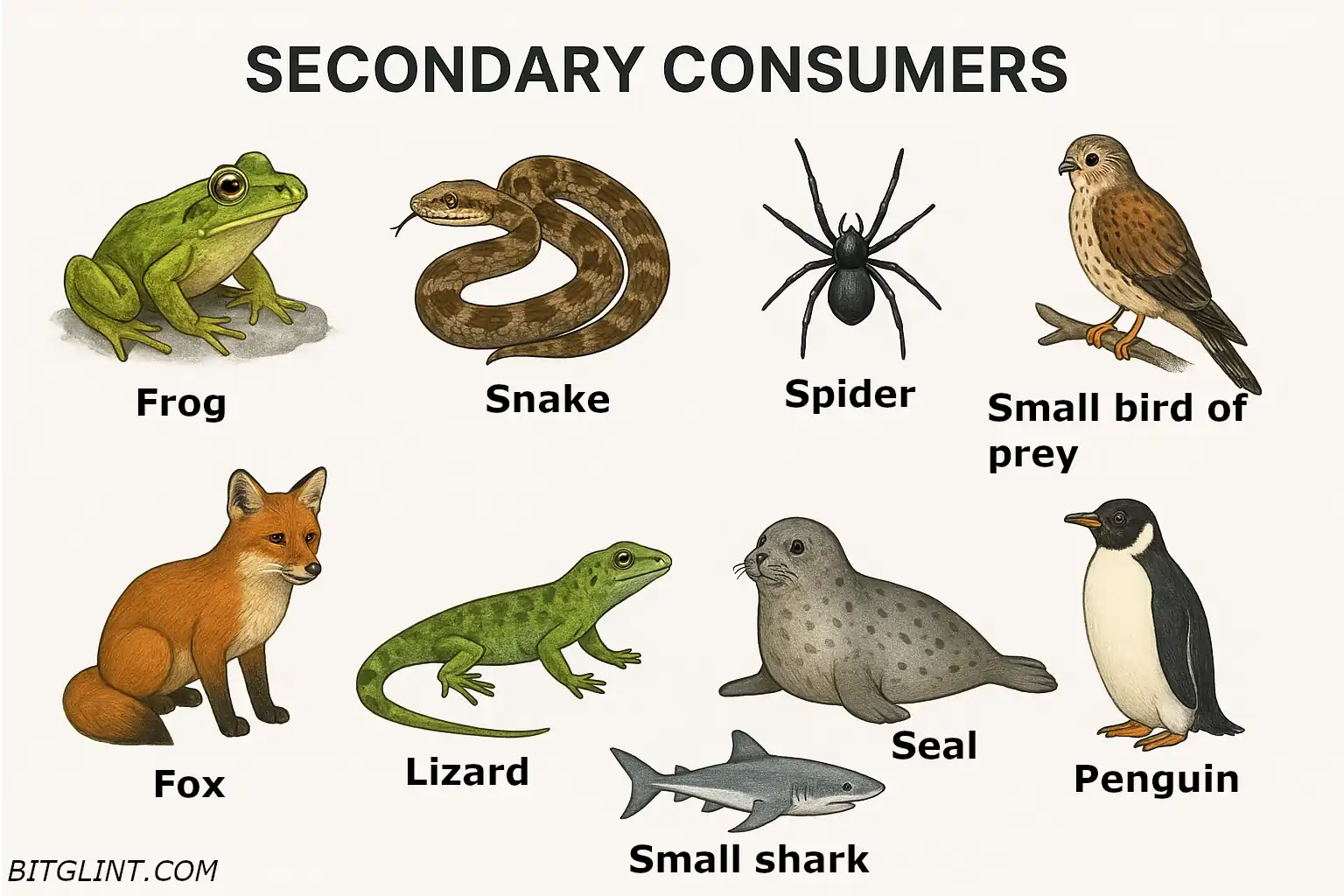
Examples of Secondary Consumers
These examples of secondary consumers show how different animals rely on plant-eating species for food. Each one highlights a simple, real-world food chain in action.
1. A Snake Eating a Mouse
Snakes are a classic example of secondary consumers. Many snakes feed on mice, which are primary consumers. Mice usually eat seeds, grains, and plants, placing them one step lower on the food chain. The snake comes next. It doesn’t eat plants or producers—it eats animals that eat plants. That’s what makes it a secondary consumer. It shows how energy moves from plants to small animals to predators.
2. A Fox Catching a Rabbit
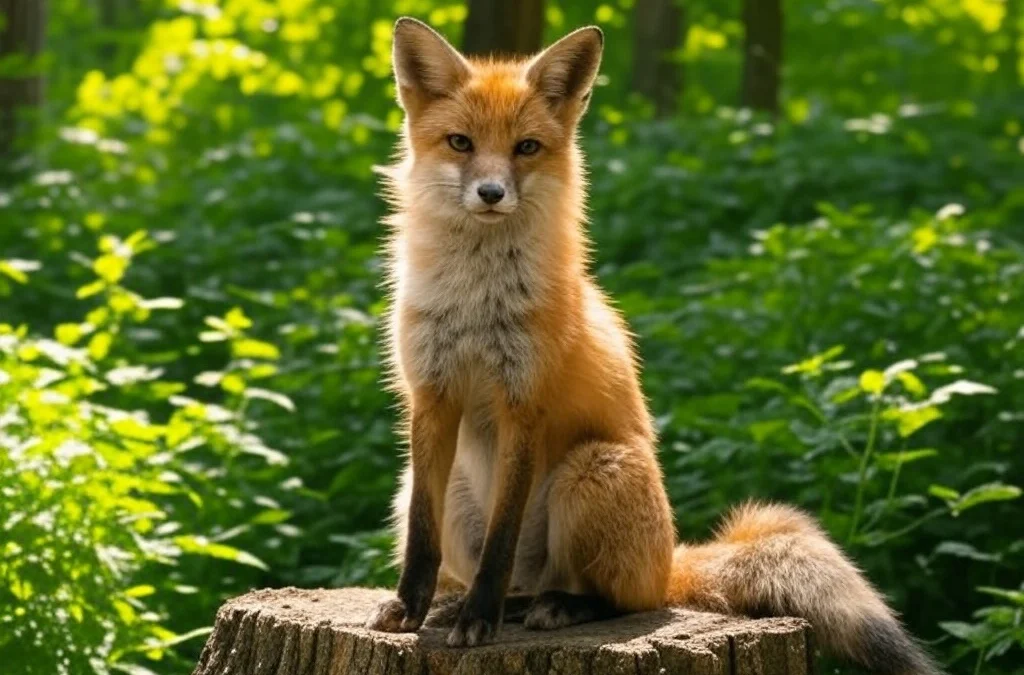
When a fox hunts and eats a rabbit, it’s acting as a secondary consumer. Rabbits feed on grasses and plants, which makes them herbivores, or primary consumers. The fox eats the rabbit, so it takes in energy from a plant-based source, just one step removed. This example is common and easy to picture, which makes it perfect for understanding how food chains work.
3. A Spider Eating a Fly
This might happen right outside your window. Spiders catch and eat flies in their webs. Flies feed on rotting food, plants, or other organic matter, making them primary consumers. The spider eats the fly. That makes it a secondary consumer. It’s small, but still plays a clear role in the food chain.
4. A Bird Eating a Caterpillar
Think of a robin pulling a caterpillar from the soil. That’s a great real-life example of a secondary consumer in action. Caterpillars feed on leaves. They’re herbivores. When the bird eats the caterpillar, it becomes a secondary consumer. This helps people understand that even animals we see every day play a part in bigger food systems.
5. A Frog Eating a Grasshopper
Grasshoppers eat plants. Frogs eat grasshoppers. This makes the frog a secondary consumer. It’s a clear chain: plant -> insect -> amphibian. Simple and effective for explaining how energy moves upward in a food chain.
6. A Seal Eating a Fish
Seals are marine animals, and many of them eat fish. Fish such as herring or sardines feed on plankton, which are tiny plant-like organisms. Those fish are primary consumers. The seal eats the fish and becomes a secondary consumer. This shows that food chains work in the ocean just like they do on land.
7. A Lizard Eating a Cricket
In many warm climates, lizards feed on insects like crickets. Crickets eat plants, seeds, or other organic matter. They’re primary consumers. The lizard that eats them is a secondary consumer. This example helps show that secondary consumers come in all sizes, not just big predators.
8. A Human Eating Chicken
Humans can be secondary consumers too. When someone eats chicken, and that chicken was raised eating corn or plants, the person becomes a secondary consumer in that chain. Chicken = primary consumer, human = secondary. This brings the food chain concept closer to home. It’s something people experience without even thinking about it.
9. A Tuna Eating a Smaller Fish
In the ocean, large fish often eat smaller fish. Tuna, for example, eat fish like anchovies or mackerel. Those small fish feed on plankton, which are producers or very low-level consumers. That places the tuna at the secondary consumer level, sometimes even higher. It’s a great example of a complex food web in action.
10. An Owl Hunting a Mouse
Owls hunt mice at night. Mice eat seeds, grains, and plants. So they’re primary consumers. The owl, by eating the mouse, becomes a secondary consumer. This is a clear predator-prey relationship and one of the most well-known examples in nature. It’s easy to remember and often used in schools to explain food chains.
11. A Centipede Eating an Earthworm
In many gardens, centipedes hunt earthworms. Earthworms feed on decaying plants and organic matter. That puts them at the primary consumer level. The centipede eats them, making it a secondary consumer. It’s not a large or flashy animal, but it plays a clear role in the food chain. This shows how even tiny predators matter.
12. A Penguin Eating Krill
Penguins in the wild often feed on krill. Krill are small creatures that eat phytoplankton—tiny plant-like organisms in the sea. That makes krill primary consumers. When a penguin eats krill, it acts as a secondary consumer. This is a good ocean-based example that many people don’t think about, but it shows the food chain in action.
13. A Wolf Eating a Deer
Wolves are hunters. When a wolf catches a deer, it becomes a secondary consumer. Deer eat grasses, shrubs, and leaves. So they’re herbivores—primary consumers. The wolf eats the herbivore. That’s the clear link. It’s a good example of a larger predator depending on plant-eaters to survive.
14. A Praying Mantis Eating a Moth
Praying mantises are known for their fast and sudden strikes. They often catch and eat moths and other flying insects. Moths feed on plants or plant nectar, making them primary consumers. The mantis that eats them is a secondary consumer. This shows how quick, small predators can still hold an important place in the food chain.
15. A Bass Eating a Minnow
In freshwater lakes and rivers, a bass will often feed on smaller fish like minnows. Those minnows typically eat algae or small aquatic plants. So they are primary consumers. The bass is a secondary consumer. Many people who fish have seen this happen, so it connects food chains to real outdoor experience.
16. A Wasp Eating a Caterpillar
Wasps don’t just sting—they also hunt. Some wasps paralyze caterpillars and feed on them. Caterpillars feed on leaves, which makes them herbivores. When the wasp eats the caterpillar, it becomes a secondary consumer. This example highlights insect food chains, which are often overlooked but just as important.
17. A Hyena Eating a Zebra
Hyenas are both scavengers and hunters. When a hyena hunts and eats a zebra, it’s acting as a secondary consumer. Zebras feed mostly on grass. They are herbivores, or primary consumers. The hyena’s role is to consume plant-eaters, which makes it a textbook secondary consumer in the wild.
18. A Pike Eating a Frog
The pike is a strong freshwater predator. It can eat frogs, which themselves often eat insects. That means frogs are secondary consumers too—depending on what they eat. But when a pike eats a frog, the pike takes the secondary spot in that version of the chain. It’s a flexible example, which helps show how food chain roles can shift based on the exact prey.
19. A Coyote Eating a Groundhog
Coyotes adapt to many environments and eat a variety of animals. Groundhogs, also called woodchucks, mostly eat plants and roots. That puts them at the herbivore level. When a coyote hunts a groundhog, it becomes a secondary consumer. This is a common interaction in rural or forested areas.
20. A Kingfisher Eating a Tadpole
Kingfishers are small birds that live near water. They feed on small aquatic creatures. Tadpoles feed on algae and plant material in the water. So they’re primary consumers. When the kingfisher eats a tadpole, it takes on the role of secondary consumer. It’s a quick moment in nature, but it shows a clear chain: plant -> tadpole -> bird.
More Examples of Secondary Consumers
- A Weasel Hunting a Vole
- A Tarantula Eating a Beetle
- A Raccoon Eating a Mouse
- A Skunk Eating a Grub
- A Heron Eating a Frog
- A Jackal Eating a Hare
- A Dragonfly Nymph Eating Mosquito Larvae
- A Domestic Cat Eating a Bird
- A Crab Eating a Snail
- A Roadrunner Eating a Lizard
Is a Lion a Secondary Consumer?
A lion is not a secondary consumer. It is a tertiary consumer, sometimes even a quaternary consumer, depending on the food chain. Lions eat large herbivores like zebras, wildebeests, and antelopes. These animals feed directly on plants, which makes them primary consumers.
So why isn’t the lion considered a secondary consumer? The reason is simple. A secondary consumer eats animals that eat plants—like a snake eating a mouse. A tertiary consumer, like a lion, eats those secondary consumers or feeds directly on large herbivores. Lions are at the top of the food chain. They have few or no natural predators, and they don’t eat plants or insects. They only hunt meat, and usually bigger prey.
It’s important to understand that not every meat-eater is a secondary consumer. A lot depends on what the animal is eating. If a predator eats something that only eats plants, it could be considered a secondary consumer. But if it eats animals that are already secondary consumers, it’s a step higher.
Lions sometimes eat secondary consumers too, such as warthogs, jackals, or even hyenas, which may feed on smaller animals themselves. This shows that lions don’t just eat herbivores—they also eat animals that are already partway up the food chain.
Think of it like steps on a ladder:
-
Plants are at the bottom (producers).
-
Animals that eat plants are one step up (primary consumers).
-
Animals that eat them are next (secondary consumers).
-
And animals that eat those are higher still (tertiary consumers).
The lion fits into that higher category. It’s not just another predator—it’s one of the top ones. That’s why it’s not listed alongside snakes, frogs, or spiders when talking about secondary consumers.
This is a key point for anyone trying to understand how the food chain works. Not all carnivores are the same. What they eat defines where they sit in the chain.
Are Humans Secondary Consumers?
Yes, humans can be secondary consumers—but not always. It depends on what a person eats. If someone eats chicken, beef, pork, or fish that were fed on grains or plants, they are acting as a secondary consumer. That’s because they’re eating animals that ate plants. In that case, it’s a clear food chain: plant -> animal -> human.
But here’s where it gets interesting. If a human eats another animal that itself ate other animals—like a large fish that ate smaller fish—they are actually functioning as a tertiary consumer. That’s one level higher. On the flip side, if someone sticks to a plant-based diet, they are a primary consumer, since they’re eating directly from the producer level.
So humans don’t have just one role in the food chain. Our place changes based on our food choices. Most people don’t think of themselves in those terms, but it’s a useful way to understand how food chains work in real life.
Think about a common dinner: grilled salmon with a side of vegetables. The vegetables make you a primary consumer. The salmon might make you a secondary or even tertiary consumer, depending on what the fish ate. It’s not just science—it’s part of daily life.
Can an Animal Be Both a Secondary and a Tertiary Consumer?
Yes, some animals can be both secondary and tertiary consumers, depending on what they eat. This isn’t a trick question—it’s just how nature works.
An animal’s place in the food chain isn’t always fixed. It changes based on what it eats in that moment. For example, a fox might eat a rabbit one day and a snake the next. The rabbit eats plants, so the fox is a secondary consumer in that case. But if the snake had eaten a rodent or insect that also ate plants, the fox becomes a tertiary consumer. Same animal. Different role.
This shows that food chains are not straight lines. They’re more like webs. Animals don’t always stay in one category. It all comes down to what they’re eating.
People don’t eat the same thing every day. One day you eat grilled vegetables. The next day it’s a burger. Each meal puts you in a different place in the food chain. Animals are the same. They eat what’s available.
So when you’re trying to figure out if an animal is a secondary consumer, don’t just ask what it is. Ask what it’s eating. That’s the key.
Read also: Commensalism: 20 Examples & Definition
The Most Popular on BitGlint

30 Focus Examples & How to Improve Concentration
Focus is one of the most important skills in life. Whether you're working, studying, playing sports, or even having a...

Top 50 Biggest Examples of Controversy
Controversy has been part of human society for as long as people have disagreed. Healthy debate can help a society...

30 Surrogacy Examples & Meaning
Surrogacy has quietly reshaped how millions of people around the world build families. Whether driven by medical...

20 Easy Sustainable Living Tips for Busy Professionals
Living sustainably can be a challenge, especially for busy professionals who often have limited time and resources....

30 Benefits of Studying Philosophy
Studying philosophy is more than an academic pursuit; it's a journey into the depths of understanding, critical...
TOP 20 Benefits of Organic Gardening
Organic gardening is becoming increasingly popular around the world. With a growing focus on sustainability and...

20 The Most Important Interpersonal Skills
In this article we will focus on the 20 most important interpersonal skills, including active listening, empathy,...
Get Inspired with BitGlint
The Latest
Top 50 Essential Train Travel Tips
Train travel is one of the most enjoyable and fascinating ways to explore a new destination. From scenic routes to cultural experiences, traveling by train allows you to see the world from a unique perspective. However, train travel can be overwhelming, especially for...

30 Circumcision Examples & Definition
Circumcision is one of the most widely practiced and discussed surgical procedures in the world — yet many people still have questions about what it actually involves, why it is performed, and what it looks like across different contexts. Whether you are exploring...
100+ Superstitions Examples, Types, and Meanings
Superstitions have been around for thousands of years. Even in today’s modern world, many people still follow them — often without even realizing it. From tossing salt over your shoulder to checking the clock at 11:11, superstitions are still part of everyday life....
100 Natural Things List
Nature is full of amazing things that exist without human involvement. From towering mountains to tiny grains of sand, natural things shape the world around us. Whether living or non-living, these things play a role in life on Earth. This list covers 100 natural...