
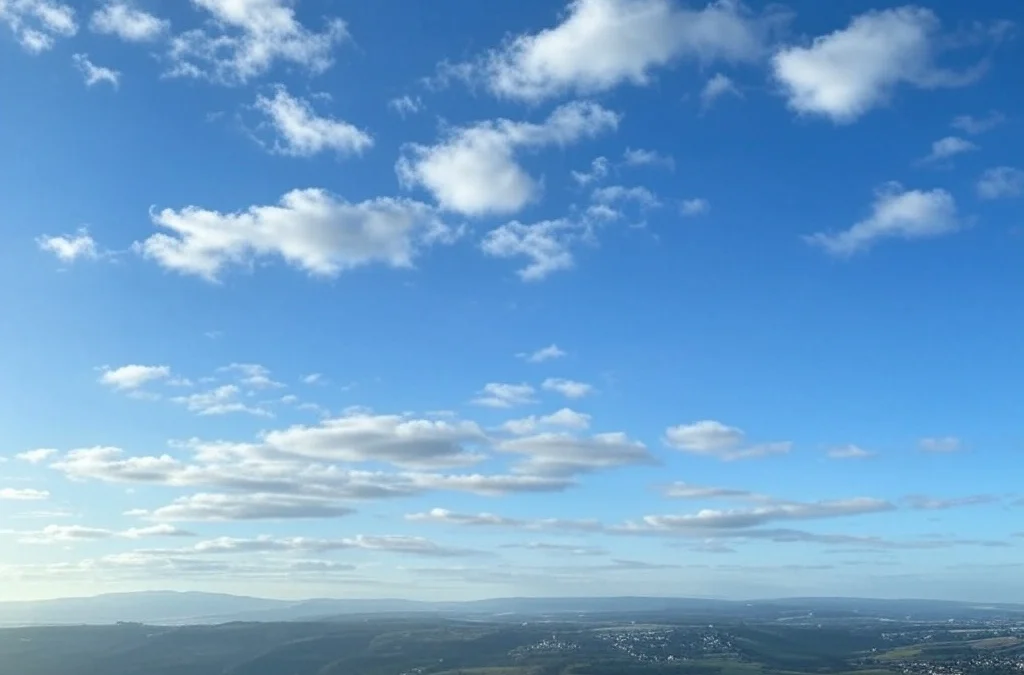
The sky is full of things – some you see every day, others only once in a while. Some are natural, like clouds and stars. Others are made by people, like airplanes and satellites. From quiet sunsets to loud rocket launches, the sky is never empty.
People have been looking up for as long as we’ve been around. We watch the weather, follow the stars, and notice strange lights or fast-moving dots across the night. Sometimes we look up out of habit. Sometimes we look because something catches our eye. Either way, there’s always something happening above us.
In this article, you’ll find a complete list of 100 different things that can be seen in the sky – during the day, at night, and at times in between. Some you’ll recognize right away. Others might surprise you. But they all remind us just how active, vast, and interesting the sky really is.
Let’s take a look at what’s up there.
100 Things That Are in the Sky
- Sun
- Moon
- Stars
- Clouds
- Rainbows
- Lightning
- Airplanes
- Helicopters
- Hot air balloons
- Drones
- Satellites
- Space stations
- Comets
- Meteors
- Shooting stars
- The Milky Way
- Aurora Borealis (Northern Lights)
- Aurora Australis (Southern Lights)
- Weather balloons
- Kites
- Birds
- Bats
- Butterflies
- Paragliders
- Hang gliders
- Parachutes
- Fireworks
- Blimps
- Airships
- Rockets
- Space shuttles
- Contrails (airplane trails)
- Smoke from chimneys
- Smog
- Skywriting
- Tornadoes
- Hailstones
- Snowflakes
- Rain
- Thunderclouds
- Fog (at high elevations)
- Venus (Morning Star)
- Mars
- Jupiter
- Saturn
- Shooting star trails
- Star constellations
- Solar eclipses
- Lunar eclipses
- International Space Station
- Weather satellites
- Military jets
- Gliders
- Microlight aircraft
- UFOs (Unidentified Flying Objects)
- Jetpacks
- Flying cars (in future)
- Flares
- Sky lanterns
- Planetary alignments
- Zodiacs (as star patterns)
- The Big Dipper
- The North Star (Polaris)
- The Moon’s craters (visible with the naked eye)
- Eclipse shadows
- Light pollution
- Artificial satellites
- Space debris
- Weather drones
- Civilian aircraft
- Cargo planes
- Military helicopters
- Agricultural planes
- Skydivers
- Windsocks (at airports)
- Flocks of birds in formation
- Dragonflies in flight
- Swarms of insects at dusk
- Air ambulances
- News choppers
- Skydiving formations
- Balloon animals at festivals
- Light aircraft
- Chemtrails (controversial but often many people talk about them)
- Flying squirrels (gliding)
- Eagles soaring
- Thunderheads
- Sun halos
- Moon halos
- Supermoons
- Blue moons
- Blood moons
- Solar flares (visible via telescope)
- Rocket launches
- Missiles (in military contexts)
- Astronauts (during spacewalks)
- Satellite dishes (on tall buildings, pointing skyward)
- Air shows
- Plane banners (advertisements in the sky)
- Celestial events (like meteor showers)
Other things sky include:
- dust
- Starlink
- air
- oxygen
- flies
What Are the Most Visible Things in the Night Sky?
When you look up at the night sky, a few things stand out right away. These are the objects most people notice first. They’re bright, clear, and often seen with the naked eye—even without a telescope.
The Moon is usually the most visible thing in the night sky. It’s bright, large, and easy to spot in all its phases—from crescent to full. Some nights it lights up the whole sky, making other things harder to see.
After the Moon, the stars come next. On a clear night away from city lights, you can see thousands of them. Some stars look brighter than others. That’s not just because of distance—some stars are simply bigger and hotter. People have looked at stars for thousands of years. Some even gave them names and made patterns out of them. These are called constellations.
The most famous one in the northern sky is the Big Dipper. It’s part of a larger constellation called Ursa Major. If you can find it, you can also spot the North Star, also known as Polaris. That star has helped travelers find their way for centuries.
You might also see a few planets. Unlike stars, they don’t twinkle. They shine with a steady light. Venus, often called the “Evening Star,” is one of the brightest. Jupiter and Mars are also often visible. If you’re lucky and the timing is right, Saturn might make an appearance.
Then there are satellites. These are human-made objects, but they move across the sky just like stars. The International Space Station (ISS) is the brightest of them. It looks like a fast-moving star, crossing from one part of the sky to the other in a matter of minutes.
Sometimes, you’ll see a meteor—a quick, bright streak of light. Some people call them shooting stars, but they’re really tiny bits of space rock burning up in Earth’s atmosphere. During a meteor shower, you might see dozens in a single hour.
If you’re lucky and in the right place, you could even witness the Northern Lights – also known as the Aurora Borealis. They appear in the far north and look like glowing curtains of light. They’re not common, but unforgettable when seen.
Many people find peace just looking up. It’s a quiet reminder of how big the world is – and how small we are. Kids ask questions. Adults pause. And some nights, the sky just feels extra close.
No matter where you live, the night sky offers something worth seeing. The key is to stop, look up, and take it in.
Why Do People Look at the Sky?
Looking at the sky is something people have done forever. It’s part instinct, part curiosity. For many, it’s a simple habit. For others, it brings comfort or even answers.
Some people look up to check the weather. Others watch planes or count stars. Kids stare at clouds. Farmers read the sky for signs of rain or wind. Pilots depend on it. Astronomers study it. Soldiers monitor it. The sky connects people in different ways.
It’s always there. Always changing. Sometimes clear, sometimes stormy. But never exactly the same.
At night, the stars remind us how small we are. It can feel humbling. Peaceful, even. In big cities, lights get in the way. But in the countryside, the sky stretches wide. You see everything—the Moon, planets, constellations, satellites. It makes people stop and think.
During the day, the sky is louder. Brighter. But it still has quiet moments. A jet gliding through. A cloud rolling past. A single bird flying high. Even something simple like a sunbeam breaking through gray clouds can feel meaningful.
Many people say the sky helps them clear their head. It’s not about science. It’s about feeling. About space. About silence.
The sky also marks time. Sunrise. Sunset. Moonrise. These are things that don’t change, no matter what else is happening in the world.
It’s also something we share. No matter where you are: New York, Texas, or a small town somewhere, you look up and see the same sky. Maybe not the same clouds or stars. But the same space. That matters more than most people realize.
People don’t need a reason to look at the sky. But when they do, they usually find one.
The Sky and Its Role in Astrology
For thousands of years, people have looked to the sky for meaning. Long before weather apps or telescopes, the sky was a guide. Not just for time or travel—but for understanding life itself.
In astrology, the sky is everything. The positions of the stars, planets, sun, and moon form the foundation of every astrological chart. Many believe that where these bodies are in the sky at the moment of your birth can influence your personality, emotions, and even the events in your life.
It’s not just about your zodiac sign. That’s just the start. Astrologers study the full sky—called the natal chart or birth chart—to interpret deeper meanings. They read the angles between planets. They track which sign each planet is in. They even note the phase of the moon. It’s like a snapshot of the sky frozen in time.
Some look to the sky for signs of what’s ahead. When a planet moves into a new sign, astrologers call it a transit. Many believe these shifts affect things like mood, relationships, and energy. Mercury going “retrograde” is one example that gets a lot of attention. Some people take it seriously. Others don’t. But many still pay attention.
The sky has also been used to mark important times. Full moons, eclipses, and planetary alignments often carry symbolic meaning in astrology. Some see them as times for change. Others use them to reflect, make decisions, or set intentions.
You don’t have to believe in astrology to notice how often people bring up the sky when they talk about their lives. “It must be the full moon.” “My stars say this is a lucky week.” It’s part of the culture now, whether you follow it closely or just catch the headlines.
Looking up at the sky and wondering what it means is a human thing. It’s not about science or proof for everyone. Sometimes, it’s about feeling like you’re part of something bigger. For many, astrology gives the sky a voice—and that voice feels personal.
Even in today’s world, astrology keeps people watching the sky. It’s not just stars and planets. It’s stories. Messages. Questions. And maybe a few answers.
Read also: 100 Natural Things List
The Most Popular on BitGlint

30 Focus Examples & How to Improve Concentration
Focus is one of the most important skills in life. Whether you're working, studying, playing sports, or even having a...

Top 50 Biggest Examples of Controversy
Controversy has been part of human society for as long as people have disagreed. Healthy debate can help a society...

30 Surrogacy Examples & Meaning
Surrogacy has quietly reshaped how millions of people around the world build families. Whether driven by medical...

20 Easy Sustainable Living Tips for Busy Professionals
Living sustainably can be a challenge, especially for busy professionals who often have limited time and resources....

30 Benefits of Studying Philosophy
Studying philosophy is more than an academic pursuit; it's a journey into the depths of understanding, critical...

TOP 20 Benefits of Organic Gardening
Organic gardening is becoming increasingly popular around the world. With a growing focus on sustainability and...

20 The Most Important Interpersonal Skills
In this article we will focus on the 20 most important interpersonal skills, including active listening, empathy,...
Get Inspired with BitGlint
The Latest
Top 50 Essential Train Travel Tips
Train travel is one of the most enjoyable and fascinating ways to explore a new destination. From scenic routes to cultural experiences, traveling by train allows you to see the world from a unique perspective. However, train travel can be overwhelming, especially for...

30 Circumcision Examples & Definition
Circumcision is one of the most widely practiced and discussed surgical procedures in the world — yet many people still have questions about what it actually involves, why it is performed, and what it looks like across different contexts. Whether you are exploring...
100+ Superstitions Examples, Types, and Meanings
Superstitions have been around for thousands of years. Even in today’s modern world, many people still follow them — often without even realizing it. From tossing salt over your shoulder to checking the clock at 11:11, superstitions are still part of everyday life....
Top 30 Lifelong Learning Examples & Why It Matters
Lifelong learning is an essential practice for personal and professional development, offering endless benefits that span across various aspects of life. It involves the continuous pursuit of knowledge and skills, far beyond the confines of traditional education...